
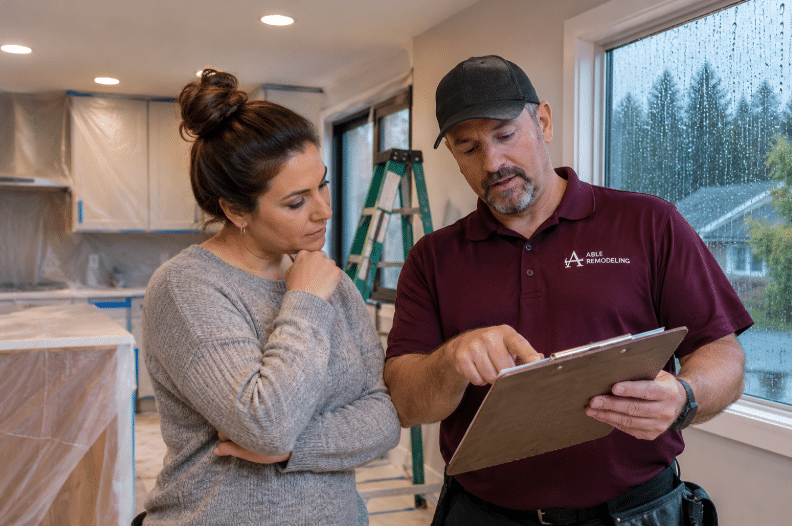
Tacoma’s rainy season doesn’t have to mean putting your home improvement plans on hold. While frequent rainfall and cooler temperatures can create challenges for certain construction projects, many interior renovations can move forward with proper preparation, moisture management, and scheduling.
For homeowners considering kitchen upgrades, bathroom improvements, basement refinishing, or larger interior renovations, the wetter months can be an opportunity to focus on making indoor spaces more comfortable and functional.
Understanding how weather affects construction materials, ventilation, and project timelines can help you make informed decisions before beginning a remodel. Working with an experienced general contractor in Tacoma can help organize the planning, design, and construction stages.
Can You Remodel Your Home During Tacoma’s Rainy Season?
Yes, interior remodeling can be completed during Tacoma’s rainy season, provided the project includes appropriate moisture protection, ventilation, material storage, and construction planning.
Unlike exterior projects that may depend heavily on dry weather, many interior improvements take place inside the home’s existing structure. However, rain can still influence how materials are delivered, how construction debris is removed, and how indoor humidity is controlled. Projects involving exterior openings, roofing modifications, additions, or significant structural changes may require additional weather protection.
The key is to evaluate the scope of work before construction begins and determine which activities could be affected by wet conditions.
Why Rainy-Season Planning Matters for Tacoma Homes
Tacoma and surrounding Pierce County communities experience significant seasonal rainfall, particularly during the cooler months. Persistent moisture can create challenges for homes with aging windows, inadequate ventilation, existing leaks, or poorly controlled indoor humidity.
1. Indoor Moisture and Humidity
Excessive indoor humidity can affect certain building materials and finishing processes. Drywall compounds, paints, adhesives, and some flooring products require appropriate temperature and humidity conditions to perform as intended. Poor drying conditions may delay finishing work or affect the quality of the completed installation. Follow product-specific requirements rather than assuming materials will dry according to a standard schedule.
2. Material Deliveries and Storage
Rain can expose materials to moisture during unloading and transportation. Drywall, wood products, cabinets, and flooring should be protected from rain and stored according to manufacturer instructions. Some materials need time to adjust to indoor conditions before installation. Proper delivery coordination can reduce moisture-related problems.
3. Existing Water Intrusion
Before renovation, check for visible leaks, damp surfaces, condensation, and other signs of moisture. Installing new finishes over an unresolved problem can conceal damage and lead to expensive repairs. Identify the source before closing walls or installing flooring.
Interior Remodeling Projects to Consider During the Rainy Season
Kitchen Remodeling
Kitchen remodeling can improve storage, convenience, and functionality. Typical improvements include new cabinets, countertops, backsplashes, floors, lighting, electrical fixtures, and layout changes when feasible. Because kitchens may involve plumbing, electrical work, or structural modifications, plan the work before demolition.
Bathroom Remodeling
Bathrooms can benefit from new fixtures, better ventilation, durable finishes, more functional storage, or a more accessible shower. Waterproofing and ventilation are essential regardless of the season. Consider shower entry, maintenance, and slip-resistant flooring alongside appearance.
Basement Refinishing
Basement refinishing can turn an unfinished room into useful space. Before installing flooring, drywall, or insulation, inspect for water stains, damp concrete, musty odors, condensation, and previous flooding. Resolve moisture issues before closing the space.
Interior Layout and Design Improvements
Layout planning can help homeowners improve room connections, storage, and circulation. Able Remodeling offers design services that can help evaluate renovation ideas, floor plans, and construction requirements.
How to Prepare Your Tacoma Home for a Rainy-Season Remodel
Step 1: Identify Your Remodeling Priorities
Define whether the primary objective is a functional kitchen, updated bathroom, improved storage, or more usable living space. Establish goals before selecting finishes.
Step 2: Inspect for Moisture Problems
Look for leaks, condensation, damaged drywall, and unusual odors, especially around bathrooms, basements, windows, and exterior walls. Have moisture sources evaluated before proceeding.
Step 3: Establish a Realistic Budget
Account for construction, finishes, professional services, and a contingency for hidden conditions. Older homes can reveal unexpected repairs after demolition.
Step 4: Plan Material Deliveries and Work Areas
Discuss how materials will enter the house, where they will be stored, and how work zones, dust, debris, occupied rooms, and ventilation will be managed.
Step 5: Discuss Project Timing With Your Contractor
Review how weather, material lead times, inspections, and moisture-sensitive installations may affect the schedule. Ask for a realistic plan rather than an inflexible completion date.
Do You Need a Permit for Interior Remodeling in Tacoma?
Some interior remodeling projects in Tacoma require permits, while certain cosmetic improvements may be exempt. Work involving structural modifications, relocated plumbing, electrical alterations, or conversion of unfinished space into living space may require permits and inspections. Requirements depend on the scope. Confirm them with Tacoma Planning and Development Services before beginning work.
Why Professional Remodeling Planning Makes a Difference
Interior remodeling involves construction sequencing, existing conditions, installation requirements, and coordination between trades. Working with an experienced contractor can help identify concerns before work begins. Able Remodeling provides residential remodeling and general contracting services in Tacoma and surrounding communities.
Frequently Asked Questions About Rainy-Season Remodeling in Tacoma
Is winter a good time to remodel a house in Tacoma?
Winter can be a practical time for interior work that does not require extensive exterior exposure. Suitability depends on scope, building condition, material requirements, and scheduling.
Does rain affect interior remodeling?
Rain can affect deliveries, storage, ventilation, humidity, and work involving exterior openings. Proper moisture control helps many indoor tasks continue.
Can drywall be installed during the rainy season?
Yes, when the building is protected against water intrusion and indoor conditions meet installation and finishing requirements.
Should I check for leaks before remodeling?
Yes. Identify and correct existing leaks before installing walls, floors, cabinets, or other finishes over affected areas.
What interior projects are suitable for Tacoma homes?
Kitchen, bathroom, interior layout, and some basement projects may be suitable. Basement work should begin with moisture evaluation.